
A Child’s Vow
The Invisible Script That Followed Me into Adulthood

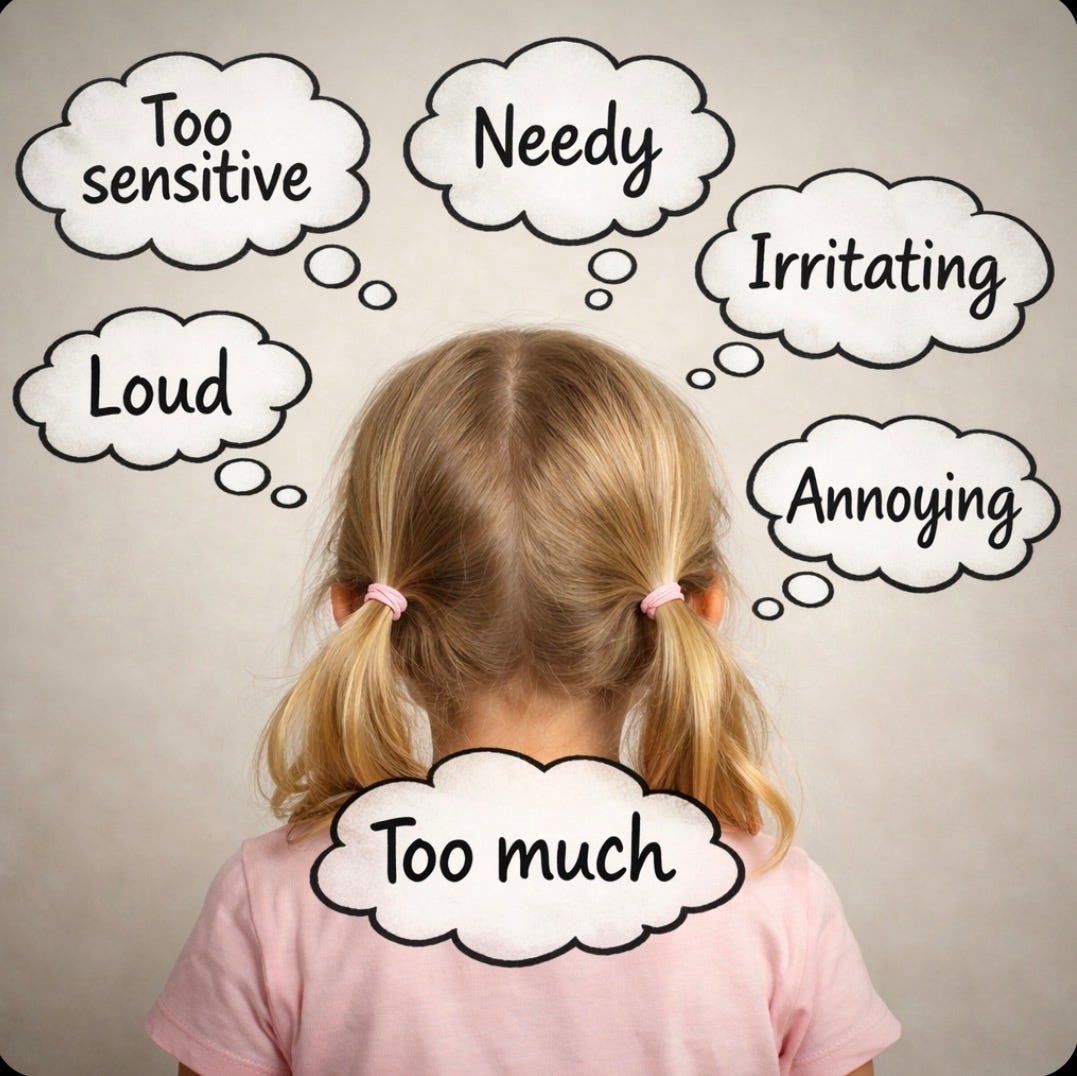
Welcome, Cycle Breakers
This week’s article comes with a gentle reminder to tend your heart as you read. We will be exploring:
How small, often-overlooked childhood moments can quietly shape lifelong beliefs
The invisible vows we make in moments of vulnerability — and how they follow us into adulthood
A personal story of a birthday cake, a breaking point, and the meaning a child makes when repair never comes
How these early covenants show up in our relationships, our faith, and our view of God
And be sure to engage with the Going Deeper section, where you will find practical resources, including a grounded, trauma-aware invitation to reflect on your own “cake moment” and begin noticing what shaped you.
There are moments in our lives that don’t look like much from the outside.
No one marks them as significant. No one sees in the moment the damage they will cause later. No one gathers the family afterward and says, “We need to talk about what just happened.”
But inside of us, these moments are pivotal. They’re formative. These moments cause something to solidify within us—A belief is formed. A vow is made. A script is written.
And without realizing it, we begin setting the rhythm of our lives by it.
I have spent years helping people explore their stories, and I can tell you this with confidence: we don’t just carry traumatic memories. We carry the conclusions we drew in those most vulnerable moments. Often, those conclusions are formed in less verbal and more visceral ways. It is in those vulnerable moments, when we didn’t have language, power, or protection, that a false narrative is formed.
The Beliefs We Carry
In the times when our sense of safety and belonging are challenged, we do the only thing that feels safe. We adapt. Sometimes we call it resilience, but most of the time? It’s really a means of survival. And survival comes with agreements. When these coping mechanisms are made in our formative years, we don’t have the language to describe them. But the messages are no less binding.
Agreements like:
“Don’t need too much. Then I can be accepted.”
“Stay small. If I’m seen, I might be hurt.”
“Be useful. Then they will want me around.”
“Don’t trust anyone. Bad things happen when others are in control.”
“Hope is dangerous. Keep that to myself, and I’ll be alright.”
“Perform well enough, I will be loved.”
“It’s not what I did that is the problem. It’s who I am.”
At some point, those agreements stop being coping strategies and start becoming covenants. A covenant is a binding commitment. And when you are a child who has had to rely on yourself, breaking those covenants later can feel like a betrayal of self. Like your very existence is being threatened by breaking them.
But what kept you safe then may be the very thing keeping you stuck now.
The Defender in Me
Of course, I didn’t know any of this when I was just nine years old, standing in my kitchen with a birthday cake.
It was October, and my Girl Scout troop had done a cake-baking activity. Not a box cake with canned icing, but a real, baked-from-scratch, decorated-like-a-Picasso (when he was 9) cake. I had poured my whole self into it. October was my mom’s birthday month, and it was fortuitous that our cake-making extravaganza happened near her birthday.
I brought the cake home like it was sacred. In my child-mind, it was more than dessert. It was an offering. I didn’t just want to give my mom a cake. I wanted to give her a reason to soften. A reason to approve of me. A reason to connect.
I wanted to attach.
Why Attachment Matters
That ache to attach is one of the most holy and heartbreaking parts of the human experience. It is how God designed us. We were made for connection; to be held, known, and safe. And all our research on attachment styles tells us the same thing. That’s why wounds left unrepaired in our relationships with our caregivers have such a long shelf life. They strike at our very foundations, setting the stage for every other significant relationship in our lives.
In homes where adults are emotionally unpredictable, children become experts at reading energy. We scan tone of voice, facial expression, footsteps, and even silence. We learn how to read the room the way other children learn how to play. Our very safety depends on it. But if there’s a chance of a connection, a child will risk safety to feel seen and accepted by their caregiver. That is, until the tipping point is reached.
My Tipping Point
I remember my mom walking in the door that day. I remember feeling that something was off. I did not have the words for it, but my nervous system knew. Her energy was heavy, irritated, and distant. While everything in me urged me to proceed with caution, I somehow believed this would be the exception. That the cake held some mystical power to break through her walls and earn her affection.
So, I did what so many children do. I tried harder. I insisted and pleaded. I begged her to just try the cake, just look at the decorations, just take one bite. To see what I had done for her. It was too much for her in that moment. Whatever emotional reserve she was using to hold back her irritation gave way. The dam broke.
My mom swept the cake off the counter and slammed it into the trash.
It was fast. Final. Devastating. In that moment, I did what children always do when something painful happens, and there is no repair. It was no longer something my mom had done.
I made it mean something about me.
As a child, I was unable to think, “My mom is overwhelmed. My mom is hurting. My mom is dysregulated.”
Instead, I concluded:
“I asked for too much.”
“My need is too much.”
“It is not safe to want.”
That was the day an invisible script became a covenant.
Not because my mom threw away a cake, but because there was no repair for the way it impacted me. No one came to me and said, “That wasn’t about you.” And without repair, the interpretation of my mom’s actions was left to my nine-year-old self. Agreements made that day would follow me for years. And if I’m being honest, sometimes, in my most vulnerable moments, I still need to remind myself to actively break the covenant.
This is how generational patterns form. Not only through overt dysfunction and trauma, but through quiet relational injuries that go unaddressed. Through moments where a child’s tenderness is met with rejection, contempt, or emotional absence.
The invisible scripts of our childhood become the scripts by which we live our adult lives:
In our marriage: “Don’t need too much.”
We take them into church: “Perform, serve, don’t be messy.”
We take them into prayer: “God is disappointed with how needy I am.”
From the outside, these agreements are all too easily mislabeled as strength, structure, achievement. But on the inside? It’s fear, insecurity, and uncertainty that make us question whether who we are at our core is worthy of being loved and accepted. At the root of it all is a child still searching, in every relationship. Even in our relationship with God.
How Jesus Sees Children (including the child within us)
The Bible speaks to this more than we realize.
In the Gospels, we see Jesus correcting His disciples for getting in the way of children drawing near. He saw their need for connection and invited them in. (Mark 10:14; Luke 18:16; Matt. 19:14).
He doesn’t treat the hearts of children casually, either. He is fiercely protective. “Whoever causes one of these little ones who believe in me to stumble…” (Matthew 18:6). That is not poetic language. That is a warning. God knows what happens when children are harmed. He knows what it does to their minds, their bodies, their beliefs. He knows what it does to their future relationships. And it grieves His heart. Sometimes, we have a hard time believing that. Mainly because we believe what’s true of our earthly parents is true of God, too. But nothing could be further from the truth.
Repair Through God and the Work of Healing
Some of us learned to believe God was like our caregivers: unpredictable, easily angered, withholding affection, hard to please. But that is not who He is. He is close to the brokenhearted (Psalm 34:18). He binds up wounds (Psalm 147:3). He does not crush bruised reeds (Isaiah 42:3). He does not despise the child who is reaching.
He meets her.
And often, He heals her through more than one kind of repair. Through prayer and Scripture, yes, but also through the gift of therapy: a place where what was once confusing can become clear, where shame can be named, where the nervous system can finally exhale, and where old covenants can be gently rewritten.
Therapy doesn’t replace God. It can become one of the ways He brings His healing close, where clinical wisdom and spiritual truth work together to restore what was broken.
If you’ve never done this work before, start small: name the “cake moment,” name the vow you made, and tell the truth about what it cost you. Then consider inviting both God and a trained therapist into that story, someone who can help you process what happened, not just spiritually, but emotionally and relationally, too.
Because the covenant your younger self adopted and adapted to wasn’t meant to be a life sentence. There is freedom and safety waiting for you and for all the parts of you that didn’t get it when you needed it most.
God can be trusted with this. Let the healing begin.
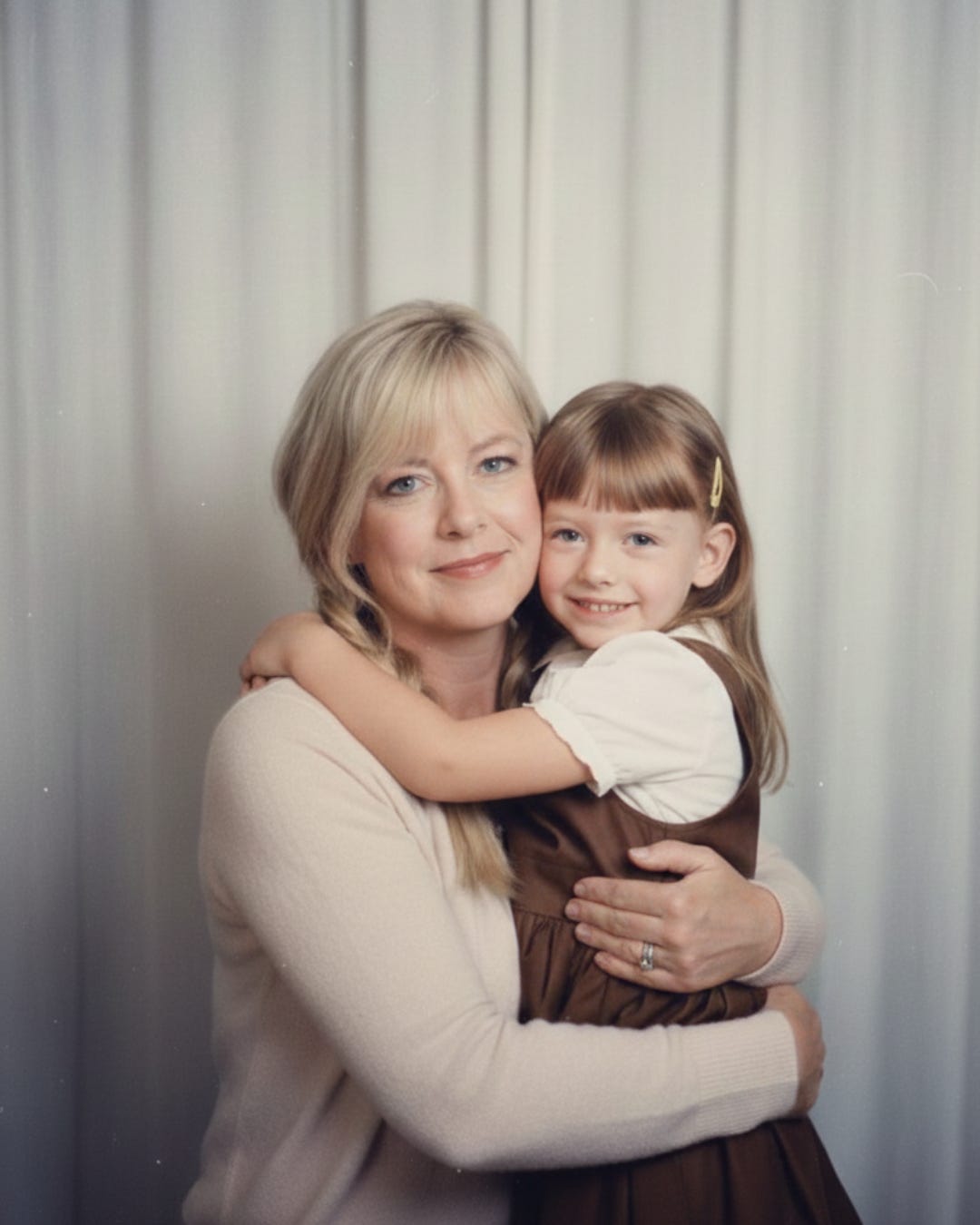
*The above story was taken from Generations Deep: Unmasking Inherited Dysfunction and Trauma to Rewrite Our Stories Through Faith and Therapy
Now it’s your turn to apply what we’ve been discussing. Be sure to engage with the Going Deeper section that follows for practical ways to implement what we’ve been discussing.
Going Deeper
Healing begins when we name what happened, the vow we made, and invite God into the place where repair was missing.
Before you begin, pause and create a felt sense of safety.
Remember, this section isn’t meant to pull you back into pain. Rather, it’s meant to help you notice what shaped you, and to let God meet you there with tenderness.
💛 A Grounding Exercise:
Put one hand over your heart and one on your stomach. Take three slow breaths. As you inhale for a count of 5, say or think: “I am safe...” As you exhale, through your mouth for a count of 7, say or think: “God is with me.”
Feel yourself supported in the chair. Feel your feet firmly on the ground. Stay here until you feel calm and safe.
❤️🩹 Your Cake Moment and a Gentle Note About Support:
Choose a “cake moment” that feels manageable. Start with something mild; a memory that stings but doesn’t overwhelm. You don’t have to begin with your deepest wound to begin healing.*
If at any point you feel flooded, numb, panicky, or emotionally overwhelmed, that’s not failure; it’s information. Pause. Take a break. Come back later. You can also choose to do this with a trusted friend, pastor, or, ideally, a trauma-informed-faith-informed therapist.
1) What is your “cake moment”?
A moment where you reached for love, approval, safety, comfort, and it went wrong.
2) What did you decide in that moment?
Write it as a covenant:
“I will never ____ again.”
“I must always ____.”
“People can’t be trusted with ____.”
3) Where has that covenant followed you?
Name one relationship where it still shows up.
4) What new covenant would you like to write in its place?
“I will practice trust with someone.”
“I don’t need to always ___________”
“I know I can trust _____________”
4) Invite God into this moment:
“Jesus, show me what You see. Heal what was broken. Replace shame with truth. Teach me how to attach without fear.”
Optional: “And if this feels too heavy, help me take it one step at a time.”
*This reflection is not a replacement for therapy. It’s an invitation to begin noticing the places where healing is needed, and to let God guide you toward wise, supported repair.
📖 Scriptures to Sit With:
“Search me, O God, and know my heart! Try me and know my thoughts! And see if there be any grievous way in me, and lead me in the way everlasting!” - Psalm 139:23-24, ESV
“Blessed be the God and Father of our Lord Jesus Christ, the Father of mercies and God of all comfort, who comforts us in all our affliction, so that we may be able to comfort those who are in any affliction, with the comfort with which we ourselves are comforted by God.” - 2 Corinthians 1:3-4, ESV
“Peace I leave with you; my peace I give to you. Not as the world gives do I give to you. Let not your hearts be troubled, neither let them be afraid.” - John 14:27, ESV
“You have kept count of my tossings; put my tears in your bottle. Are they not in your book?” - Psalm 56:8, ESV
🎵 Songs:
“Truth Be Told” – Matthew West
“Who You Say I Am” – Hillsong Worship
When you’re finished with the Going Deeper Section, do something kind for your nervous system: drink water, step outside, take a short walk, or put on one of the songs above. Healing work is holy work, and it deserves gentleness.
Disclaimer: While Gina Birkemeier is a counselor, the content of this website and any of the products provided or recommended by Gina Birkemeier are not specific counseling advice nor are they a substitute for individual counseling. The content and products provided on this website are for informational purposes only.
When we recognize that self-protection has become self-sabotage... a new season can emerge in peace instead of chaos... when we let safe and secure happen in our souls. Thank you.
Going back to my “cake moment” gave me such an icky feeling. It was a small blink in time, but I remember it so vividly. I’ll need to revisit this one throughout the day to process.
Thank you for the steps.